Fine Arts | Ohio Wesleyan University facilities galleries curriculum admission faculty alumni awards gifts
FACULTY  
 
    Our faculty have come to Ohio Wesleyan from diverse educational backgrounds and with a great variety of interests and life experiences. The faculty lead very active, outgoing, and professional lifestyles. They have a strong commitment to their own expression as artists and researchers, and to the students who make up the undergraduate Fine Arts program. Central to this commitment is the sincere interest placed on quality teaching and the high expectations of the final results. If one single thing can be said of the program it is that the faculty encourage and support independent investigation and personal expression through content, form, and process.
   
Kristina Bogdanov–Ceramics, Drawing and Figure Drawing
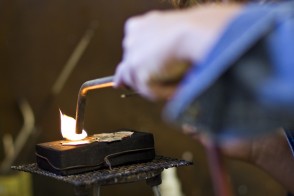
Cynthia Cetlin–Metals and Art Education
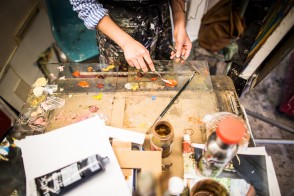
Frank Hobbs–Painting, Drawing and Figure Drawing
James Krehbiel–Chair; Printmaking and Computer Imaging
Justin Kronewetter–Director: Ross Art Museum;
  Photography and Gallery Management
Carol Neuman de Vegvar–Art History
Jonathon Quick–Sculpture
Aida Stanish–Art History
Crit Warren–Graphic Design
 
Marty J. KalbProfessor Emeritus
Rinda MetzProfessor Emerita
Ebb HaycockProfessor Emeritus
 
 
Kristina Bogdanov   to top

Assistant Professor
kkbogdan@owu.edu
740-368-3607


B.F.A. Academia of Applied Arts, Belgrade University
M.F.A. University of Kentucky

Ms. Bogdanov joined the department in 2007 and teaches ceramics, drawing, figure drawing and 3D design. Previously Ms. Bogdanov taught at Georgetown College and the University of Kentucky. She has exhibited both nationally and internationally and is the recipient of the Kim Adler Memorial Award for 3D art.

  "To be an artist is to be curious, tenacious and questioning. Art is about finding multiple answers and recognizing one's individuality. I encourage students to find the answers meaningful to themselves."Love the art within yourself, don't love yourself within art."
 

Recent Work and Artist's Statement

"Eve's Code" and "Pandora's 21st century boxes" bodies of work

My inspiration comes from the experience of being a mother. I have been fascinated with the scientific discoveries on the DNA chain as well as revolutionary contemporary debates on human evolution. In my creative journey I research the questions of our beginning and our existing, emphasizing the important and absolutely unique role of women that in my view are the most sophisticated software of all.

National and cultural identities are an essential part of every individual. As a mother and an artist, I am responsible to attempt to celebrate and appreciate the differences. All of us are unique in our own way but that also, all of us are the same, a human being.

I feel that the contemporary world is in an imbalance between nature and industrial technology and so I use clay as one of the most archival natural materials to carry modern, hi-tech visual elements. Combining the two I create a harmony in the art piece that would metaphysically relate to the issue of finding a harmony in today's world.

Platters:

As a ceramicist and printmaker, I find the surface of the platter as most exciting to experiment and manipulate. The platter surface evolves into my journal’s page. Layers of glaze colors, drawings, photo images and typography translate into a story that echoes my personal interactions with the time and world around.


Cynthia Cetlin   to top

Professor
cjcetlin@owu.edu
740-368-3609


B.A. Barnard
M.A.T. Simmons
M.F.A. SUNY New Paltz

Ms. Cetlin joined the department in 1987, teaching metals, 3D design, art education, and art history. Previously, Ms. Cetlin taught at Pratt Institute and Southeastern Massachusetts University. She has exhibited her jewelry and small sculpture in juried shows and small group invitational exhibitions throughout the country.

  "I enjoy the diversity of interests, skills, and backgrounds among my students. Observing their artistic growth and working to facilitate the development of a personal vision are for me rewarding occupations. My hope is that students will take with them problem-solving skills, discipline, a lifelong curiosity about visual art, and an enduring involvement in the creative process."
 

Recent Work and Artist's Statement

The four brooches have a figural and narrative element; three of them incorporating a stylized female figure.“Scrolling,” “Siesta,” and “Captive” are from a series, in which the dominant figure is shown in relief, restrained, sometimes breaking forth, sometimes revealing forms or objects within. Each brooch is an episode: pensive or joyful, celebratory or nostalgic. Some reveal my love of ornament; in others I seek, beyond the content, a sensuous cohesion of form, color and surface.

The necklace “Melt,” references the crisis of global warming. The other two, Necklaces #7 and #8, are my most recent pieces, reflecting a new direction. The narrative qualities of the former pieces are gone. The brooches hang on the body as a two-dimensional work would hang on a gallery wall, but the necklaces adorn the body, draping or dangling with its movement.

The earlier work was about telling, these two works are about being. I am still anguished about the state of the environment and other matters, but these concerns are balanced by a celebration of nature and beauty. I have an intense attachment to color, which is an important element in my work. It has been introduced with the reactive metals, with found objects, with the colors of metals themselves, enameling or patination. My latest focus has been to create intense, sculptural color and plentiful form.


Frank Hobbs   to top

Assitant Professor
fihobbs@owu.edu
740-368-3612


B.A. Virginia Polytechnic Institute
M.F.A. American University

Mr. Hobbs joined the faculty in 2007 and teaches painting, drawing, figure drawing and 2D design. Before coming to OWU, Mr. Hobbs taught at Colby College and Washington and Lee University. He has shown his work internationally, is well represented in various private and public collections, and is the recipient of grants from the NEA and the Virginia Museum of Fine Arts.

  "Not only do our art students learn the rudiments and rigors of their craft, but they also appropriate an understanding of its history, and the cultural forces and aesthetic theories that have driven its development. I enjoy sharing my experiences and perspectives as a practicing artist with students in the classroom, setting up learning situations for them that challenge them to see for themselves, to think visually, and to find ways of giving shape and form to their own experience and intentions."
 

Recent Work and Artist's Statement

My work is about being somewhere and paying attention. In a world that is increasingly mediated by technology and language, the act of consciously taking time to experience an actual, concrete place in the world would seem almost an act of rebellion. I enjoy, and have learned to trust the tension that a specific place, a specific time, a specific set of complex conditions of light and space confer upon the process of painting. My aim is to capture, not the subject per se, but the energy of the struggle to see and respond to the visual complexity of the subject. In this way, even the false starts, and the many inevitable adjustments and revisions become necessary, meaningful and beautiful.


James Krehbiel   to top

Professor
jwkrehbi@owu.edu
740-368-3604


B.A.A. Montana State
M.F.A. Indiana University

A faculty member since 1986, Mr. Krehbiel is the department chair and teaches in the 2D media of printmaking, computer imaging, and drawing. He has shown his prints, drawings, and computer images nationally and abroad in juried exhibitions, invitational small group exhibitions, and one-person shows.

  "I teach from the standpoint that we are all artists first and printmakers, ceramists, or photographers second. Students should explore a variety of media and exploit various techniques and approaches to become better artists. Each student comes to my classes with strengths, and each person's style or aesthetic sensitivities are taken into consideration. I push students to take a serial approach to investigating their ideas as soon as they are ready. Using this system, students can develop their visual concepts while working through processes and trying various formal possibilities on a body of work."
 

Recent Work and Artist's Statement

Over the years, while traveling in the Four Corners region of Colorado, New Mexico, Utah, and Arizona and looking intently at the landscape, I have been well aware of modern man’s impact on the natural beauty of the West. Over a decade ago I renewed my interest of an older occupation of the land by various groups of people living in the Four Corners region. The 700- to 2000-year-old roads, moki steps, cliff dwellings, pueblos, kivas, kiln sites, dance sites, towers, pithouses, granaries, cultivation fields, and rock art sites are all evident for those who explore.  For the past ten years I have been exploring not only the rock art, ceremonial, living, and storage sites but have also investigated their trail routes, farming, and resource locations and have worked toward an understanding of the interrelationships between these locations and their use in the context of the environment.

This work is part of a bigger response to experiencing the sites first hand, reading archeological surveys, site reports and studies about the area, finding historical artifacts and signatures left by early explorers and archaeologists, and discussions with scholars, friends, and modern Pueblo Indians. I have visited most of the sites numerous times at different times of the year and annually find many new ones. I owe a dept of gratitude to those few folks, close friends, who participate and endure many of these adventures.

These particular pieces are each about specific aspects of prehistoric sites located in the backcountry of southeast Utah and the experience of finding and spending time at each site and its setting.


Justin Kronewetter   to top

Professor
jrkronew@owu.edu
740-368-3602


B.A. Illinois Wesleyan
M.F.A. Cranbrook Academy

Mr. Kronewetter, who joined the faculty in 1972, is the Director of the Ross Art Museum. He teaches photography and gallery management. His photographs have been exhibited in juried and invitational shows throughout the United States and are included in many public and private collections. He organizes and coordinates the annual ASITAW eight-week study program in the Southwest and has been a long-time advisor of the GLCA New York Arts Program.

  "Artists are problem solvers. I advise my students that they need to be self-reliant, self-confident, and that they must refuse to be stymied by the face that, at times, they may not know how to do something. There is a real perseverance needed in order to be a successful—and enduring—artist."
 

Recent Work and Artist's Statement

I make my images by taking my camera with me on "visual scavenger hunts." Unlike the scavenger hunts of my youth which began with a list of items to be sought out in a prescribed period of time, those I engage in now start without knowing exactly what I'm looking for and occur without concern for time. I depend on my subject to reveal itself to me during the hunt. And once discovered, it's my intent to record what I've found in a way that is both insightful and personally satisfying.

The images themselves are typically of common things seen in an uncommon way. I take particular satisfaction in finding my subject matter among those things that are normally overlooked by passersby due to their presumed insignificance. Rather than wanting to show a particular subject in its whole form, I'm more interested in moving 'in close' to exclude from the picture frame everything except that which I consider to be absolutely essential to convey the true essence of the subject. In this respect I embrace Mies van der Rohe's dictum that "less is more."

At a point when photographic technology permits, if not encourages, the production of complex imagery on a larger and larger scale, I take more satisfaction in creating carefully crafted images on a more intimate scale. Rather than forcing the viewer to back away to see the entire image, I prefer the viewer to be drawn in and encouraged to see details otherwise unnoticed.


Carol Neuman de Vegvar   to top

Professor
cndevegv@owu.edu
740-368-3603


B.A. Bryn Mawr College
Ph.D. University of Pennsylvania

The primary art historian of the department, Ms. Neuman de Vegvar joined the faculty in 1988. She taught previously at Skidmore College and Union College in New York. A medievalist, she also teaches Classical, Renaissance, Baroque, and Islamic art. She has lectured and published internationally on early western medieval art.

  "I tell my students that a work of art exists in its culture the way an organism exists with and interacts with its environment. Works of art are both reflections of and participants in the formation of the culture that produces them. My approach with students is a mix of serious scholarship, informality, and humor. I try to figure out what they need to do to achieve their dreams; what they need to make the most of their talents and abilities."
 

Research and Recent Publications

Research:

My research primarily concerns the art of Anglo-Saxon England and Ireland in the early medieval period. My work raises questions of meaning in context, of the range of audiences of early medieval art and the associations that different groups of viewers and users brought to the structures and objects that survive from this era. I am interested in differences of viewpoint, both literal and metaphoric, between ecclesiastics and laity, men and women, the literate minorities of church and court and the larger agrarian population. I apply this approach to works across several media: ecclesiastical architecture, manuscript illumination, metalwork and sculpture.

My long-term project over the past decade has been on drinking horns and their social contexts in the early medieval British Isles. I am interested in the role of these vessels in feasting practices and in hospitality as a first stage in an escalating cycle of reciprocity that was thought ideally to bind together different levels of a vertically structured elite with ties of mutual loyalty and obligation. The project also entails a catalog of the extant metalwork horn fittings from the British Isles in the period from the Roman to the Normans; the horns themselves rarely survive as the keratin of which natural horn is constituted is fugitive in most archaeological contexts. This project will be published as a book, currently in the writing stage, to be entitled Drinking Horns and Social Discourse in Early Medieval Britain and Ireland; 500-1100. Research on this project, as well as others referenced in my list of recent publications, has been generously supported by Ohio Wesleyan University under the aegis of the Thomas E. Wenzlau Presidential Discretionary Fund.

Recent Publications:

Coeditor (with Éamonn Ó Carragáin, University College Cork),: Roma Felix — Formation and Reflections of Medieval Rome, Church, Faith and Culture in the Medieval West,
(Aldershot, Ashgate, 2008). Includes my article,"Gendered Spaces: The Placement
of Imagery in Santa Maria Maggiore,"pp. 97-111.

"In Hoc Signo: The Cross on Secular Objects and the Process of Conversion," Cross and
Culture in Anglo-Saxon England: Studies in Honour of George Hardin Brown
, ed. Sarah
Larratt Keefer, Karen L. Jolly, and Catherine E. Karkov, (Morgantown, West Virginia
University Press, 2008), pp. 79-117.

"Converting the Insular Landscape: Crosses and Their Audiences;" Text, Image,
Interpretation: Studies in Anglo-Saxon Literature in Honour of Éamonn Ó Carragáin
, ed. Alastair Minnis and Jane Roberts, (Turnhout, Brepols, 2007), pp. 407-29.

"Remembering Jerusalem: Architecture and Meaning in Insular Canon Table Arcades,"
Making and Meaning: 5th International Conference of Insular Art, Trinity College Dublin,
August 25-28th 2005
. ed. Rachel Moss, (Dublin, Four Courts Press, 2007), pp. 242-56.

"High Style and Borrowed Finery: The Strood Mount, the Long Wittenham Stoup, and the
Boss Hall Brooch as Complex Responses to Continental Visual Culture," Conversion
and Colonization in Anglo-Saxon England
, ed. Catherine Karkov and Nicholas Howe
(Medieval and Renaissance Texts and Studies. Tempe, Arizona Center for Medieval
and Renaissance Studies, Arizona State University, 2006), pp. 31-58.

Co-author (with Adam Daubney)"Lenton Keisby and Osgodby" Medieval Archaeology 50
(2006), p. 287.

"Interdisciplinarity and Medieval Studies: Method, Academic Discipline, or Illusion? A
Response to Christopher Currie" AVISTA Forum Journal, (13.2, 2003), pp. 28-31.

"Romanitas and Realpolitik in Cogitosus's Description of the Church of St. Brigit, Kildare,"
The Cross Goes North; Processes of Conversion in Northern Europe, AD 300-1300, ed.
Martin Carver (Woodbridge, Boydell for York Medieval Press, 2003), pp. 153-70.

"A Feast to the Lord: Drinking Horns, the Church and the Liturgy," Objects, Images and the
Lord: Art in the Service of the Liturgy
; Index of Christian Art Occasional Papers V, ed.
Colum Hourihane,(Department of Art History and Archaeology, Princeton
University / Princeton University Press, 2003), pp. 231-56.

Forthcoming:

"The Doors of His Face: Early Hellmouth Iconography in Ireland," Aedificia Nova: Studies in
Honor of Rosemary Cramp
, ed. Catherine Karkov and Helen Damico, (Kalamazoo,
Medieval Institute Press, Western Michigan University, 2008) pp. 176-97.

"Reading the Franks Casket: Contexts and Audiences," (Inter)Texts: Studies in Early Insular Culture Presented to Paul E. Szarmach, ed. Virginia Blanton and Helene Scheck, Medieval and Renaissance Texts and Studies (Tempe, Arizona Center for Medieval and Renaissance Studies, Arizona State University, 2008) pp. 143-61.


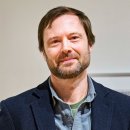
Jonathon Quick   to top

Adjunct Associate Professor
jcquick@owu.edu
740-368-3067


B.A. SUNY Genesco
M.F.A. SUNY New Paltz

Mr. Quick, who joined the department in 1988, teaches sculpture, 3D design, and serves the art department as studio technician. Previously, he was a resident artist at Peters Valley, New Jersey, and had worked as an industrial designer in the Boston area. He served as a teaching faculty member at Haystack Mountain School of Crafts, Deer Isle, Maine, Summer 1993. He currently runs his own art and architectural design business. In sculpture, he primarily works in the media of foundry casting and metal fabrication.

  "At Ohio Wesleyan we strive to teach by providing an example to our students. They see us at work in the studio creating works of art, building equipment, mounting exhibitions, and maintaining professional contacts. They get a good feel for what our work is like. In this atmosphere, capable artists armed with versatility, open-mindedness, and a genuine sense of concern can provide the cooperative, disciplined environment in which a student can flourish."
 

Recent Work and Artist's Statement

I knew from an early age that I wanted to work physically ( hands on ) with materials. Sculpture is a field that incorporates a vast range of materials and processes, old and new technologies. What could be more perfect ! My life’s journey is one of unbounded adventure and discovery. In my work I investigate various themes of the human condition with a sense of humor and empathy in an attempt to expose the true nature of our shared experience.


Aida Stanish   to top

Adjunct Instructor
amstanis@owu.edu
740-368-3613


B.A. University of Dayton
M.A., The Ohio State University
Ph.D. (abd), The Ohio State University

Ms. Stanish has taught in the Fine Arts department since 2002. She teaches Contemporary Art, Modern Art and Survey of Art History. Ms. Stanish has done extensive research in the field of contemporary art history and theory.


Research and Papers

Art in General’ and Aesthetic Judgment, paper delivered at the Art Critical Practices Forum, OSU Department of Art.

L-Beams/Kosuth/Haacke? or Die/Smithson/Levine?, series of public debates titled “Knocking Heads”, OSU Department of Art.

On Performance Art, paper delivered at the The Annual Ohio Area Student Symposium.

 
Crit Warren   to top

Adjunct Assistant Professor
finearts@owu.edu
740-368-3613


BFA Columbus College of Art and Design

Mr. Warren joined the faculty in 2006 and teaches all facets of Graphic Design. Mr. Warren is currently the principle of Solve et Coagule, a graphic design consultancy. Before this he was the creative director of Schmeltz + Warren, designer/art director with Dave Ellies Industrial Design, and Doyle Dane Bernbach in New York. The recipient of numerous national design awards, he has had work published in Communication Arts, Print, Art Direction, HOW, Step-by-Step, and Publish.

  "Each student is an individual. I create scaffolding for each, then get out of the way and let them produce design. Through critiques and one-on-one chats we find our way."
 

Recent Work and Artist's Statement

Think first, then design.

I am interested in how to jump and move information around in a space--the real world and the virtual world--using nontraditional methods and yet retaining a structure to follow the message’s logic. I feel this adds an individualistic influence, that if authentic, actually helps promote more readability while losing little in legibility.

Sometimes words are pictures and pictures are words; sometimes breaking information down into smaller units (word clusters) is the right thing; sometimes creating rivers of disparate information in the same space allows an interplay with the viewer.

I redefine myself as a visual editor: with the constantly changing methods of producing information and the equally changing methods of delivery of that information.

 
Professor Emeriti   to top
Marty J. Kalb   phone: 740-368-3608   email: mjkalb@owu.edu
         
Rinda Metz   phone: 505-534-0160   email: rmmetz_81055@yahoo.com
         

Ebb Haycock


phone: 740-369-7271


Ohio Wesleyan University